What is CPM? CPM stands for cost per mille, which means cost per thousand impressions. It is the price an advertiser pays each time an ad is shown 1,000 times, whether or not anyone clicks. CPM is the standard way to buy and compare ad space when the goal is reach and brand awareness.
Key Takeaways
- CPM = total ad cost ÷ total impressions × 1,000.
- With CPM you pay for views, not clicks or sales, so it suits awareness campaigns.
- CPC charges per click and CPA per action. Each model fits a different campaign goal.
- A low CPM only helps if the right people saw the ad.
- Judge CPM campaigns alongside reach, frequency and what people did next.
What Does CPM Mean in Advertising?
“Mille” is Latin for thousand. Ad platforms quote prices per 1,000 impressions because a single impression costs a fraction of a cent. CPM gives advertisers one unit to compare the cost of reaching people across platforms, audiences and placements.
An impression is counted when your ad is displayed to someone. The person does not have to click, interact or even read it. Platforms define an impression slightly differently. Some count it when the ad loads, while others count it only when the ad is actually visible on screen.
The same person can create several impressions. If someone sees your ad, refreshes the page and sees it again, that can count as two impressions. That is why impressions alone do not tell you how many people you reached.
Impressions vs Reach vs Frequency
These three numbers are easy to mix up, so it helps to keep them separate:
- Impressions: the total number of times your ad was shown.
- Reach: the number of unique people who saw it at least once.
- Frequency: the average number of times each person saw it (impressions ÷ reach).
Page views are different again. A page view happens when someone loads a page on your website. An impression happens wherever your ad appears, usually on someone else’s site or app.
How Do You Calculate CPM?
The formula is simple:
CPM = (total ad cost ÷ total impressions) × 1,000
You can also flip it to plan a budget. Impressions you can buy = (budget ÷ CPM) × 1,000.
A Simple CPM Example
The numbers below are made up to keep the maths easy. They are not industry benchmarks.
Say a business spends $500 on a display campaign and gets 250,000 impressions.
- Divide the cost by impressions: $500 ÷ 250,000 = $0.002 per impression.
- Multiply by 1,000: $0.002 × 1,000 = $2.00.
- The campaign’s CPM is $2.00. Every 1,000 impressions cost two dollars.
Real CPMs vary widely by platform, audience, placement and time of year. A crowded holiday season usually costs more than a quiet month. Compare your CPM against your own past campaigns on the same platform, not against a generic average.
CPM vs CPC vs CPA: What’s the Difference?
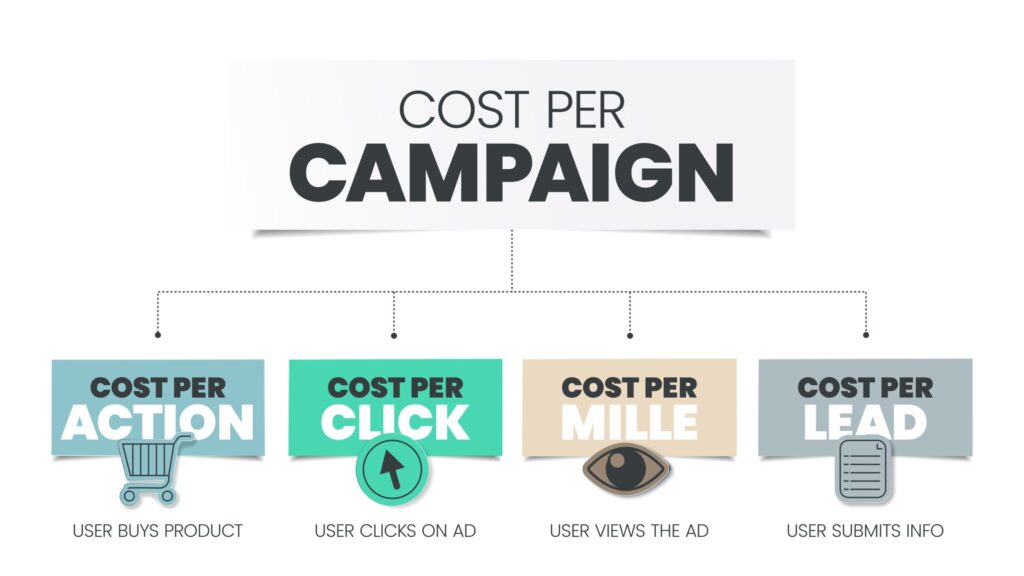
CPM, CPC and CPA measure the same spend through different lenses. CPC is cost per click. CPA is cost per action, such as a lead, a booking or a sale. You can calculate all three for any campaign, even if you only pay on one of them.
Take the made-up campaign above. It cost $500 and earned 250,000 impressions. Say it also produced 500 clicks and 10 sales. Its CPM is $2.00, its CPC is $1.00 ($500 ÷ 500) and its CPA is $50 ($500 ÷ 10).
| Model | You pay for | Formula | Best for | Main risk |
|---|---|---|---|---|
| CPM | Every 1,000 impressions | Cost ÷ impressions × 1,000 | Awareness, launches, video and display reach | Paying for views that lead nowhere |
| CPC | Each click | Cost ÷ clicks | Sending traffic to a site or landing page | Clicks from people who never buy |
| CPA | Each conversion | Cost ÷ conversions | Leads and sales with reliable tracking | Needs accurate conversion tracking and enough data |
Most Google search ads charge per click. Google Ads also offers target CPA bidding, which aims for an average cost per conversion, though you are usually still billed per click. Choosing the right model for each campaign is a core part of ads management.
When Does CPM Bidding Make Sense?
CPM works best when being seen is the goal. Common cases include:
- Brand awareness: introducing a new business, product or location to a defined audience.
- Launches and events: getting a time-sensitive message in front of many people quickly.
- Video and display: placements where people watch or scroll rather than click.
- Testing audiences: comparing CPM across segments, locations or creative to see which audiences cost more to reach.
- Predictable spend: impression-based buying makes it easier to forecast how far a fixed budget will go.
CPM bidding is less suited to campaigns where the only goal is leads or sales. In those cases, CPC or conversion-based bidding usually ties spend more closely to results. For more on choosing who sees your ads, read our guide to precision targeting.
What Are the Limits of CPM?
CPM tells you what visibility cost. It does not tell you whether that visibility worked. Keep these limits in mind:
- Impressions are not attention. An ad can load below the fold or flash past in a feed without anyone noticing it.
- A low CPM can mean low-quality placements. Cheap inventory often sits on sites and apps your customers rarely use.
- Bots and repeat views inflate counts. Platforms filter some invalid traffic, but not all of it. Check placement reports and exclude poor sites.
- High frequency wears people out. Showing the same ad to the same person too often wastes budget and can annoy them.
- It says nothing about lead quality. CPM cannot show whether the right buyers saw the ad or acted on it.
How Should You Judge a CPM Campaign?
Look at CPM next to reach and frequency, then follow what happened after the impression. Did branded searches, website visits or enquiries rise in the areas you targeted? Did people who saw the ad later convert through another channel?
Tracking past the click matters. D2 Build, a Toronto contractor, got a $367,000 project from a Google Ads lead after MGG moved its ads to an account it owns and connected HubSpot. Impression counts alone would never show an outcome like that. Platform choice matters too, so compare the best social media platforms for advertising before you set a CPM budget.
Not sure whether CPM, CPC or CPA fits your next campaign? Our ads management team can review your goals and tracking and recommend a bidding approach.
Frequently Asked Questions About CPM
Is a lower CPM always better?
No. A lower CPM means impressions cost less, but those impressions may reach the wrong people or poor placements. A higher CPM that reaches likely buyers can be the better deal.
What is a good CPM?
There is no single good number. CPM depends on the platform, audience, placement and season. The most useful benchmark is your own past performance for similar campaigns.
What is the difference between CPM and eCPM?
eCPM means effective CPM. It converts any campaign’s cost into a per-thousand-impressions figure, even if you paid per click or per action. Publishers also use it to describe revenue per 1,000 impressions.
Does Google Ads use CPM?
Yes, for some campaign types. Google Ads offers CPM-based bidding, including viewable CPM, on some Display and video campaigns. Search ads are generally charged per click.