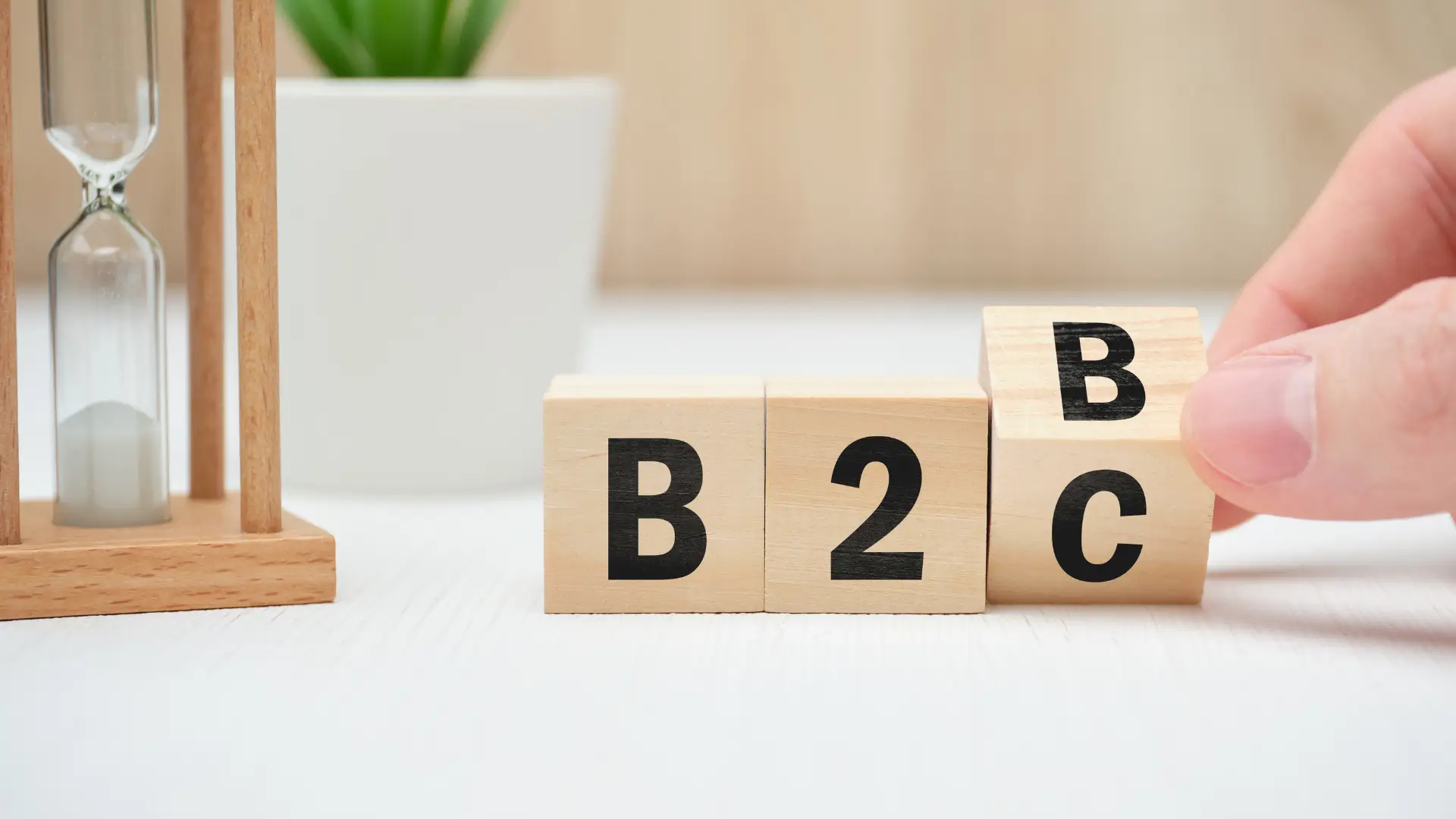
The main difference in B2B vs B2C marketing is who buys and how they decide. B2B marketing sells to other businesses, where several people weigh value, risk and return over a longer sales cycle. B2C marketing sells to individuals, who usually decide faster and based on personal needs, emotion and convenience.
Key Takeaways
- B2B buyers are teams making a business decision. B2C buyers are individuals making a personal one.
- B2B sales cycles are longer, so lead nurturing and a CRM matter more.
- B2B content educates and proves value. B2C content grabs attention and builds emotional connection.
- Pricing and relationships differ: B2B often runs on quotes and long-term accounts, B2C on clear prices and repeat purchases.
- If you sell to both, keep one brand but build separate paths, messages and follow-up for each audience.
What Is the Difference Between B2B and B2C Marketing?
B2B (business-to-business) marketing targets companies that buy products or services for their operations. B2C (business-to-consumer) marketing targets people buying for themselves or their households. Both aim to attract and keep customers, but they get there in different ways.
This table sums up the main differences:
| Factor | B2B marketing | B2C marketing |
|---|---|---|
| Buyer | A business, often a team of decision-makers | An individual or household |
| Main motive | Return on investment, risk, reliability | Personal need, emotion, convenience |
| Sales cycle | Longer, with several steps and approvals | Shorter, often one visit or a few days |
| Key channels | LinkedIn, email, SEO, Google Ads, events, webinars | Instagram, TikTok, YouTube, Google Ads, email |
| Content | Case studies, guides, webinars, comparison pages | Short video, reviews, product pages, user content |
| Pricing | Quotes, contracts, volume terms | Listed prices, promotions, subscriptions |
| Relationship | Long-term account with ongoing service | Repeat purchases and loyalty |
How Do B2B and B2C Buyers Make Decisions?
B2B purchases usually involve more than one person. A manager may find the vendor, a finance lead checks the budget and an owner signs off. Each person has different questions. Your marketing has to answer all of them with clear facts, proof and a strong business case.
B2C purchases are usually personal and faster. A shopper might see a product on Instagram, read a few reviews and buy the same day. Emotion, trust and ease play a bigger role. Social proof, strong visuals and a simple checkout or booking process carry more weight.
That said, B2B buyers are still people. Clear writing, a good website and a bit of personality help in both markets.
Why Is the B2B Sales Cycle Longer?
Bigger purchases carry more risk, so businesses take time to compare options and get approvals. A B2B lead may take weeks or months to close. During that time, your business has to stay helpful and visible without being pushy.
That is why B2B marketing relies on lead nurturing. A CRM tracks every contact and conversation. Email sequences share useful content and case studies, and reminders prompt your team to follow up at the right time.
Tracking matters most when a single deal is worth a lot. D2 Build, a Toronto contractor, is one example. MGG moved its Google Ads to an account the company owns and connected HubSpot, and one Google Ads lead became a $367,000 project. For more on connecting ads, follow-up and sales, see our guide to building a lead generation system.
B2C cycles are shorter, but follow-up still helps. Abandoned cart emails, post-purchase emails and loyalty offers bring people back.
Which Marketing Channels Work Best for B2B and B2C?
B2B channels
LinkedIn is the main social platform for reaching professionals and decision-makers. Our post on LinkedIn B2B marketing best practices covers how to use it well. Email, SEO, Google Ads on high-intent searches, industry events and webinars also work well for B2B.
B2C channels
B2C brands usually lean on Instagram, TikTok, YouTube and Facebook, where people discover products while scrolling. Google Ads, Shopping campaigns for online stores and email marketing round out most B2C plans. Influencer and creator partnerships can also work well for consumer brands.
Search matters in both markets. People research B2B vendors and consumer products on Google and, more and more, in AI tools such as ChatGPT. Pages that answer buyers’ questions clearly help in either case.
How Should Content Differ for B2B and B2C Audiences?
B2B content should educate and reduce risk. Useful formats include:
- Case studies with a clear problem, approach and outcome
- In-depth guides and blog posts that answer buyer questions
- Webinars and short demo videos
- Comparison pages and FAQs that address objections
B2C content should catch attention and build connection. Short-form video, reviews, user-generated content, lifestyle photos and clear product pages do most of the work. Storytelling helps people picture themselves using what you sell.
In both cases, write for your real buyer. Skip the jargon in B2C, and skip the hype in B2B.
How Do Pricing and Customer Relationships Differ?
B2B pricing is often custom. It can depend on contract length, volume, service level and negotiation. Buyers expect detailed quotes, clear terms and sometimes tiered options. Your marketing should explain how pricing works, even if it does not list exact numbers.
B2C pricing is usually listed and simple. Shoppers compare options quickly, and promotions, seasonal sales and subscriptions influence when they buy.
Relationships follow the same pattern. B2B clients often stay for years, so account management, regular check-ins and referrals drive much of the revenue. B2C relationships tend to be more transactional. Loyalty programs, personalized emails and fast customer service keep people coming back.
What Should Businesses That Sell to Both Do?
Many businesses serve both markets. A contractor may work for homeowners and property managers. A supplier may sell online to the public and to trade accounts. In these cases, keep one brand, but build separate paths for each audience:
- Create separate service or landing pages for business and consumer buyers.
- Run separate ad campaigns with different targeting, messages and offers.
- Tag leads in your CRM by type so each one gets the right follow-up.
- Build separate email lists and sequences for each audience.
- Track leads and revenue for each audience on its own, so you can see which one is growing.
Shared basics serve both groups: a fast website, strong reviews, consistent branding and clear contact options. To set this up across SEO, ads, social media and CRM, explore MGG’s digital marketing services.
Not sure how to split your marketing between business and consumer buyers? See how MGG can help you build a plan for each audience.
B2B vs B2C Marketing: Frequently Asked Questions
Is B2B marketing harder than B2C marketing?
Neither is harder, but each is hard in its own way. B2B takes patience and proof over a long cycle. B2C takes standing out in crowded feeds and winning quick decisions.
Does social media work for B2B?
Yes, especially LinkedIn. Decision-makers use it to research vendors, follow industry news and check a company’s expertise before they reach out.
Do B2B and B2C businesses need a CRM?
B2B businesses almost always do, because of longer cycles and several contacts per deal. B2C businesses benefit too, especially for email marketing and repeat purchases.
Can one website serve both B2B and B2C customers?
Yes. Use clear navigation that sends each audience to its own pages, offers and contact forms, while keeping the brand consistent.